Soft mechanics
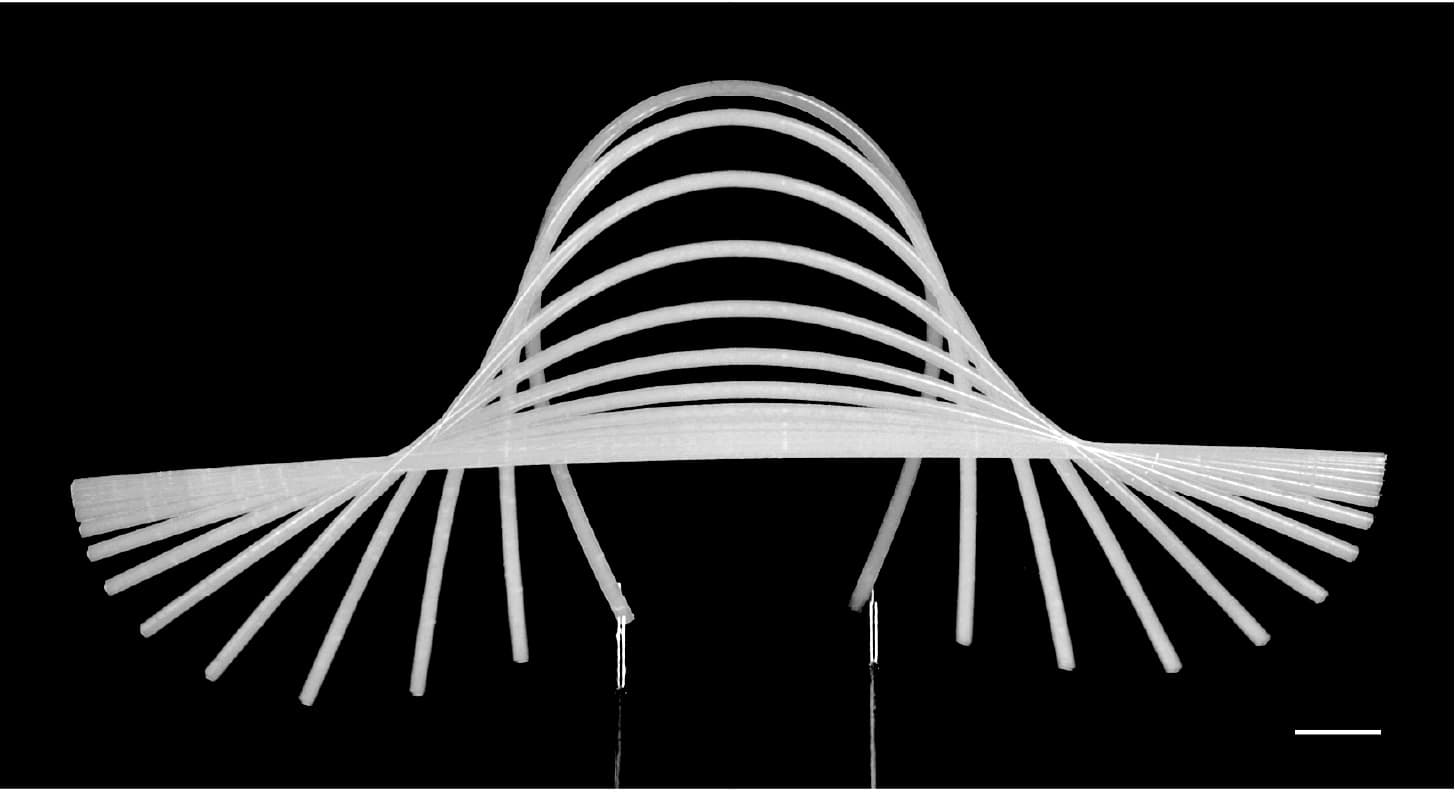
Materials that can undergo large deformation under small magnitude of force are termed soft. Soft materials are all around us, starting with biological materials such as tissues to macroscopic materials such as polymers. In our lab we are understanding how and when materials undergo instabilities, ways to design them with novel responses and controlling their behaviour for a desired function using optimisation techniques.
Further reading
Materials
Instability
Control
Robotics & Control
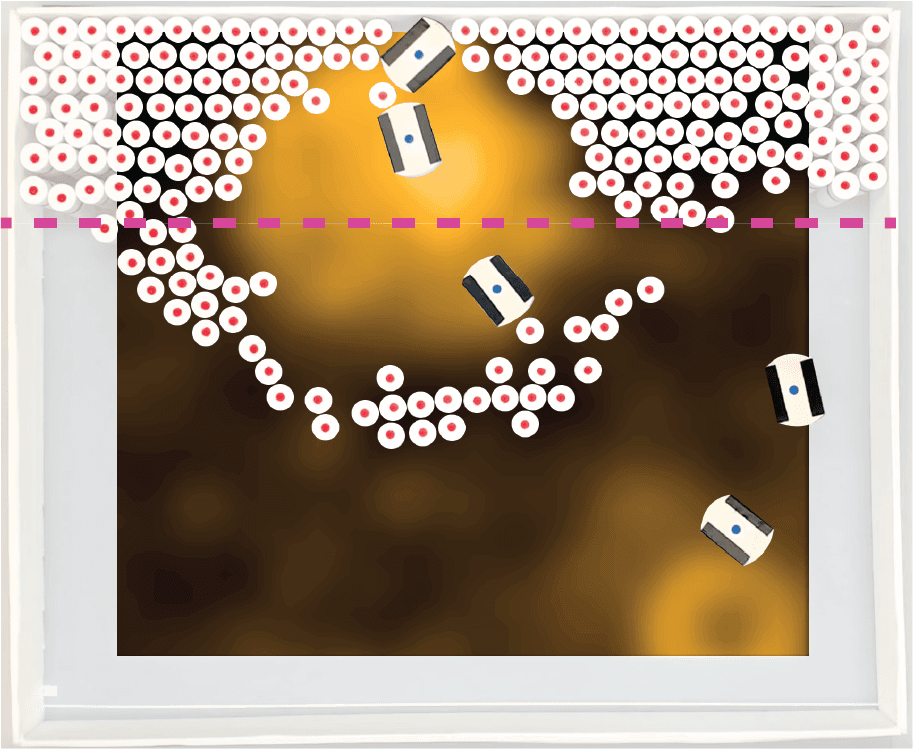
Robots sense their environment and respond to cues depending on the encoded rules to perform a desired task. We use an agent-environment approach which falls under the paradigm of embodied intelligence and utilise ideas from pattern formation theory to execute tasks in complex settings. In parallel we use modern control theoretic and machine learning approaches to design rules for the agents to perform these tasks.
Further reading
Pattern formation
Learning
Bio-robotics
AI & Scientific ML
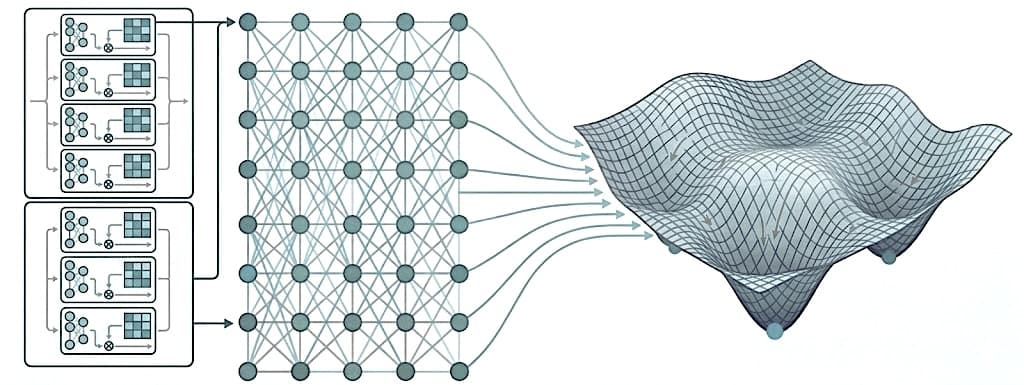
Machine Learning has become ubiquitous, pervading all areas of research. However a fundamental understanding on why they perform the way they do is an ongoing challenge. Our group is working on developing a physical understanding of these techniques using techniques from statistical mechanics and optimal control theory. We are currently working on problems in generative models, Reinforcement Learning and generalization of multimodal models.
Further reading
ML
Statistical Physics
Optimisation